
A Computationally Scalable Bayesian Sequential Learning Framework for Time-Series Forecasting
Published:
Develops a Bayesian sequential learning framework for time-series forecasting that replaces expensive MCMC inference with Nested Sampling, enabling scalable online predictions. By comparing against frequentist and deep-learning baselines across three real-world datasets, the authors show their approach handles limited, non-stationary data more efficiently while retaining forecasting accuracy.
Abstract
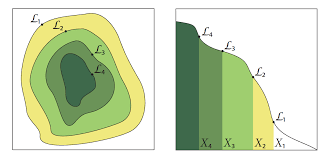
Time-series forecasting is a widely used data science technique for predicting the future state of stochastic mechanisms. Application domains that benefit from such practices include stock markets, inventory planning, supply chain management, healthcare, and resource allocation under uncertainty. In recent years, deep learning has increasingly become the method of choice in time-series forecasting applications where historical data is abundant. Alternatively, frequentist approaches are quite popular in applications where historical data is limited, but their underlying assumption of stationary data tends to restrict their performance. This paper considers an alternative approach to small data applications, extending a Bayesian sequential learning technique to overcome this shortcoming. Historically, Bayesian learning approaches have suffered from scalability problems when applied to time-series forecasting due to the Bayesian estimation step’s complexity. Contemporary Bayesian approaches utilize Markov Chain Monte Carlo methods such as Metropolis-Hastings and Hamiltonian Monte Carlo for this purpose. While these methods have proved useful for offline time-series analysis, their computational requirements limit their utility in online, high temporal frequency forecasting. We propose substituting Nested Sampling, another method for estimating Bayesian evidence, as a means of achieving a scalable time-series forecasting framework. We demonstrate our approach’s effectiveness via comparative experimental analysis on three prediction problems of practical interest.